Whether you are applying for your dream job or updating your professional profile, understanding the fundamentals of resume writing is essential to standing out in today’s competitive job market.
What Is a Resume?
A resume is a formal, concise document that summarizes your career history, skills, education, and notable achievements. Its primary goal is simple: capture a hiring manager’s attention and secure an interview.
In most job applications, a resume is paired with a cover letter. While your resume outlines your background, your cover letter provides context, explaining why your specific qualifications make you the best fit for the role.
Resume vs. CV: What Is the Difference?
While the terms are often used interchangeably, a CV (Curriculum Vitae) and a resume serve different purposes:
Resume: Typically 1–2 pages long, highly targeted, and tailored to a specific job opening. It highlights only the most relevant accomplishments and skills, usually focusing on the past 5 to 10 years of experience.
Curriculum Vitae (CV): A comprehensive, multi-page document that covers your entire career, academic history, research, publications, and certifications. CVs are most common in academia, medicine, and international job markets (such as the UK and Europe, where "CV" is often the standard term for a resume).
Formatting Flexibility
A CV generally follows a strict reverse-chronological order, listing your most recent experience first. A resume offers more flexibility based on your career stage:
Reverse-Chronological Format: Focuses on steady career progression and recent work history.
Functional Format: Emphasizes relevant skills and competencies over a timeline, ideal for career changers or those with employment gaps.
Hybrid/Combination Format: Blends a dedicated skills summary with a chronological work history.
How to Tailor Your Resume for Recruiters?
To maximize your chances of passing both Applicant Tracking Systems (ATS) and human recruiters, you should customize your resume for every application:
Align with the Job Description: Match your bullet points with the primary keywords and required qualifications listed in the posting.
Prioritize Impact Over Duties: Use strong action verbs and quantify your results with metrics (e.g., "Boosted team productivity by 20%" instead of "Responsible for managing productivity").
Keep It Relevant: Focus heavily on your most recent 5 to 7 years of work experience, keeping outdated or unrelated roles brief.
Is It "Resume" or "Résumé"?
Both spellings are correct.
Resume: The standard, modern spelling used most frequently in professional settings and online job portals.
Résumé: The traditional spelling derived from the French word for "summary," using acute accent marks (é).
In modern professional writing, "resume" is preferred for consistency and ease of search, though using accent marks is entirely acceptable as long as it remains consistent throughout your application.
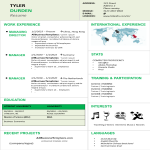
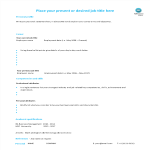
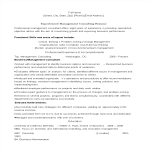
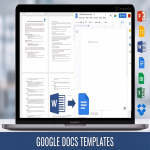
How to create a resume for an international job application? What's the recommended CV format for overseas job applications? Download this template now and get started!
Obviously, an n attractive resume will help you to stand out amongst the other job applicants. There are many resume maker websites that you can use for the purpose to customize a good resume. But you need to be careful about the contents of a resume.
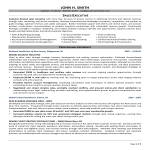
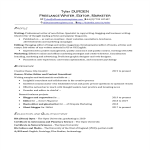
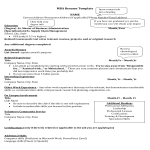
There are multiple resume templates as well out there on the internet world. You just need to choose a good-looking and appealing one about which you think that it can make you stand on the top of all the job competitors. Below are listed some necessary elements of a resume that you must ponder upon before applying to a job post:
Choose a resume format:
There are multiple resume formats out there. The best of these resume formats is listed below:
Chronological:
A chronological resume format is one that includes the method of writing achievements in the most recent manner. This means you will write your achievements in the order they took place.
Functional:
A functional resume will list your achievements in such a way that best highlights your skills. This means that you write those skills at the top that are best suited for the target job you are applying to, and the remaining can be numbered in descending order as per the job requirements.
Combination
A combination format means including both the chronological and functional format in a resume for a job. Achievements and experiences are listed in a format that looks more appealing. But this format is not used much since it destroys the consistency of a resume and makes it look disordered.
These resume formats are adopted globally. The former chronological format is best suited for some conservative fields of jobs, since it may be appealing to an older resume reader. While the functional resume format is best for a creative and advanced job that requires you to be highly specific and more goal-oriented.
Make a notable Header:
After choosing your professional resume template and deciding on the suitable format, you need to start the actual work. The header of your resume must contain the below-listed information:
Your name
Contact number
Email address
Make sure that, your email address is professional with a recognizable name. Try making a fresh email in case you have a non-professional email address. Organizations that provide serious job positions prefer professionalism over fun and non-serious people.
Write Summary:
Keep this part of your resume the shortest and strongest. Your summary will depict your purpose in applying for the job. You may use this section for explaining your intent of applying to a specific job. But this portion is not a must-have. If you think that your skills are enough solely to depict your talent, then this section may be skipped as well.
List your skills/experiences:
Mention your skills and experiences depending on the best resume format you choose to write in. Try to be more specific to the job instead of being general. You can make this section as long as you want, but since it is a resume and not a CV, you have to be more specific and choose the best ones among your list of skills/experiences.
Mention your activities
Write about the extracurricular activities in which you participated in your life. Try to mention those skills at the top that best relate your experience to the job description. It is recommended to narrate your social activities as well, as most of the companies prefer to choose an employee which has a diverse background. You need to depict yourself as a globally interactive person with high social skills.
List your academic career:
Mention the education you have received in the past years. You can decide whether to write about the percentile/CGPA or not. The only thing that matters the most is the field and degree. But if you have an exceptionally bright academic career that earned you huge rewards and awards, then it is a must for you to mention the percentage or CGPA in your resume.
Narrate your interest:
If you are really into getting the job, then try to relate your interests with the ones mentioned in the job description. Narrate in such a way that it catches the attention of the recruiter. Mention your hobbies and side jobs that you love to do, and what experience you have gained in those fields as well.
List the awards:
If you received any awards either in your academic career or you made huge profits in the past job/company, then mention those outstanding characteristics in this portion of your resume. This section is not compulsory since you can omit it if you have not received any awards yet or if you are a newbie seeking to learn and gain experience for the first time.
By following these tips one by one, we are sure that you will create a very detailed yet concise resume best suited for the job. For improvement purposes, make sure to perform a check and re-read your resume after a few hours since it will help you catch your mistakes more efficiently. Apart from self-editing, you can always ask for resume help from an expert or some senior colleague. You can ask him to recommend some valuable changes as well.
What should you not include in the resume?
As some specific terms are a must-have in a resume, there are also some terms that you need not write in a resume since these can have a negative impact on you in the eyes of the recruiter. Below are listed those parameters which you must refrain from while compiling a professional resume:
Career objective
As you know, a career objective is a highly general term, and you cannot mold it to the job description. So, we suggest not writing this objective in your resume. For example, if you are writing a career objective that does not match the job description and requirements, you are simply writing your incapability for the job.
Home address
Do not write your home address in a resume. Let us assume that if, unfortunately, your resume gets rejected and ends up in the hands of the wrong person, then there can be a privacy issue regarding your residence. So, the best solution to avoid this privacy issue is not to mention the address in professional resumes.
References
Refrain from writing references in your resume. The recruiter knows that you have references for the job, and he will for sure ask at some other appropriate time. Simply, a resume is not a proper document to mention unnecessary information.
Styled fonts
You need to stay professional. And professionalism in writing a cv resume means you do not have to write in designed and stylized fonts. Make sure that your resume is easy and readable, and does not include any complex fonts.
Avoid jargons
Jargon is words that have a simple meaning but are expressed in a difficult way. For example, you are not advised to use the word “gibberish” when you can simply write “meaningless or nonsense”. Jargon is a hidden meaning which gets most people in trouble to understand what you want to convey. The recruiter did not ask you to prove your vocabulary. Instead, he is more interested in your skills and experience.
Your picture
You are not recommended at all to attach your personal picture unless you are advised to do so in the job description. If you attach it, it may lead to discrimination against the remaining applicants. That is why it is considered a best practice not to attach your photograph.
How do you end a resume? (header 1)
A declaration in resume format for a job states that whatever information you have entered in the resume is valid and up to date. This means you are not manipulating any information, and whatever you wrote about yourself is true and authentic. Writing such declarative information will have a positive impact on the recruiter.
We recommend you put a declaration at the end of a resume for a job since this makes your position stronger in the eyes of a recruiter.
Apart from writing the declaration, you can finish your resume with a closing salutation like best regards, high hopes, cheers, etc. Paying acknowledgment is never bad, and it may help you get a +1 point in the resume evaluation.
The Internet offers multiple resume builders that will take your data as input and will give you a resume as output. If you opt to choose a resume builder from the internet, then make sure it is professional and it doesn’t spin your content.
We suggest that you write your resume in Word format so that it is easily editable for you and your resume proofreader as well. We have multiple resume examples available on our website so that you may have an idea about an expert-written resume. If you like this information, then make sure you give us a big thumbs up. If you have any questions or ideas about this blog, please write in the comments section. We will be happy to assist you.
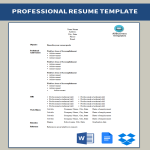
Download this Creative Resume template and after downloading you will be able to change and customize every detail and appearance and finish it in minutes.
How to attract attention with an international resume? Download this International Resume for Expats template and after downloading you can customize every detail and appearance and finish in minutes.
How to create a resume for an international job application? What's the recommended CV format for overseas job applications? Download this template now and get started!
Looking for a Single Page CV Modern Style? Download this Single Page CV Modern Style template and customize every detail of its appearance according your needs.
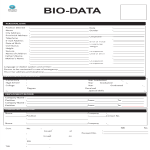
Are you looking for a professional format of Biodata template? How do I create my own biodata? Our template is professionally designed and simple to use. Download this sample template now!
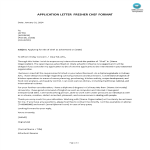
How to create a Job Application Letter For Fresh Graduate Chef? Download this Job Application Letter For Fresh Graduate Chef template. Let Your Passion Speak Louder Than Words!
How to draft a Digital Marketing Strategist Resume that will impress when you are applying for a new job? Download this Digital Marketing Strategist Resume sample now!
How to create an attractive Marketing Freelance CV that will impress your futures employers’ attention when you are applying for a new project? Download this Marketing Freelancer Resume template now!
How to create a Preschool Teacher Resume for a teacher that has not (much) experience yet, and that can still l impress? Have a look and download this Preschool Teacher Resume With No Experience template now!
How to write a strong Functional Resume for a bookkeeper or an accountant? An easy way is by checking out this Bookkeeping Functional Resume example template now!